
Not all loneliness measures are equal: ABSL releases a traffic-light system to rate them, and calls for EU-wide monitoring infrastructure.

In the first evaluation of loneliness measurement across all 27 EU countries, Annecy Behavioral Science Lab grades the tools behind billion-euro policy — and releases a traffic-light system to tell…

Continue ReadingNot all loneliness measures are equal: ABSL releases a traffic-light system to rate them, and calls for EU-wide monitoring infrastructure.

Creating connected workplaces: Insights from people leaders at leading companies

Key points Workplace loneliness is an organizational issue, not just a personal one: It shapes how people show up, collaborate, and how long they stay. Structures, leadership behavior, and culture…

Continue ReadingCreating connected workplaces: Insights from people leaders at leading companies

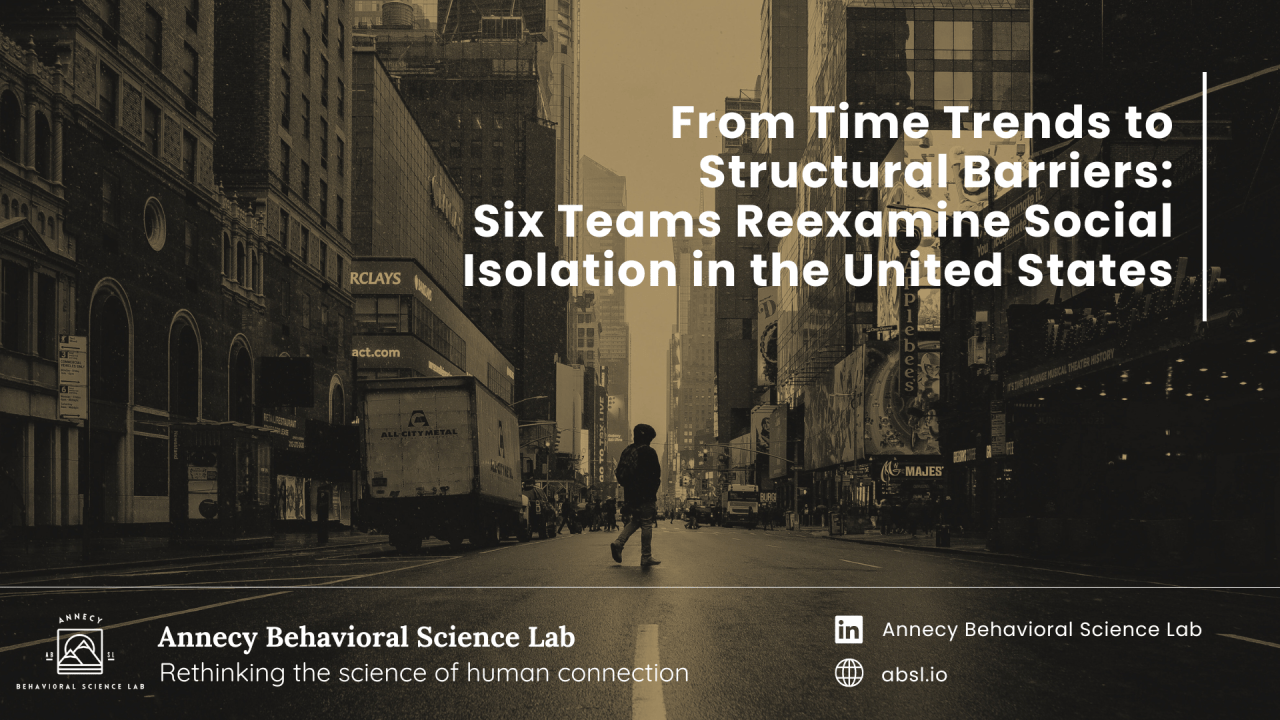
From time trends to structural barriers: Six teams reexamine social isolation in the United States

Each team approached the task differently: some wrote their code from scratch, others modified code that Nick Brown shared, and all documented ambiguities and discrepancies they encountered along the way. This post summarises the most important findings from the reproduction teams

Continue ReadingFrom time trends to structural barriers: Six teams reexamine social isolation in the United States

Beyond traditional boundaries: How big team science can dramatically improve SIL research

Social isolation and loneliness (SIL) research is facing a credibility crisis, largely driven by low-quality studies, insufficient sample sizes, and an overreliance on small-scale interventions that lack replicability.

Continue ReadingBeyond traditional boundaries: How big team science can dramatically improve SIL research

Social isolation and loneliness: The critical need for high-quality research and evidence-based interventions

Social isolation and loneliness (SIL) have emerged as significant public health concerns, with research demonstrating their profound impact on physical and mental health outcomes.

Continue ReadingSocial isolation and loneliness: The critical need for high-quality research and evidence-based interventions

The present and future of social isolation and loneliness measurement

As social isolation and loneliness emerge as critical public health concerns, we face a pressing challenge: our tools for measuring these phenomena haven't kept pace with our understanding of their complexity.

Continue ReadingThe present and future of social isolation and loneliness measurement

Why survey numbers might not always mean what you think they mean

We often hear claims like “15% of French citizens are lonely,” but how confident can we be in such statistics? The tools we use to measure constructs like loneliness are complex, and it turns out that much of what we think we know may be built on shaky foundations. In reality, the numbers we rely on might not fully capture what we hope they do.

Continue ReadingWhy survey numbers might not always mean what you think they mean